sábado, 30 de mayo de 2009

EL 732 RECORRE "TODO" LISBOA / THE 732 RUNS ALL OVER LISBON

El servicio de transporte público de Lisboa está operado por Carris en exclusividad. Dispone de 78 rutas, servidas por 745 autobuses (autocarros en portugués) en una extensión de 667 kms. Además, la empresa también está al cargo de las 5 líneas de tranvía (eletrico en portugués) servidas por 57 vehículos y una extensión de 48 kms. Todo aquel que visite Lisboa, no podrá olvidar un paseo en el tranvía 28, considerada la línea tranviaria turística. Finalmente, la empresa dispone de tres ascensores y 1 elevador, (este último de Eiffel), considerados como Monumentos Nacionales desde febrero de 2002.

Como suele pasar en algunas ciudades, la línea 32, no existe. Así que la única terminada en 32 es la 732, que realiza una "excursión" desde Caselas al Hospital Sta. María, por Plaza do Comerço. Un recorrido teórico de aproximadamente 68 minutos entre ambos terminales. Actualmente, con las obras en el entorno de la Plaza do Comerço, posiblemente sea más largo, pues las retenciones suelen ser enormes. El recorrido lo realiza entre las 6.30 y las 20.30 aunque por la tarde, sábados y festivos, se reduce el recorrido a Caselas - Centro de la ciudad (Restauradores) Public Transport in Lisbon is exclusively operated by the state owned Carris. It operates 78 routes, served by 745 buses (autocarros in Portuguese) over 667kms. It also takes care of the 5 tram routes (eletrico in Portuguese) served by 57 vehicles and 48kms of rails. Nobody can leave the city without riding on route 28, considered the "Tourist Tram Line". Finally, it is in charge of the 3 funiculars and 1 elevator (by Eiffel), all considered National Heritage since February 2002.
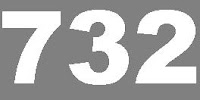
Like in other cities, the 32 route is non existent, therefore, the closest is 732 that really tours around the city, from Caselas to Hospital Sta. María, via Plaça do Comerço. A trip taking theoretically done in 68 minutes between terminuses. Currently, the works carried out in Plaça do Comerço may lengthen a little bit more this timing, due to the huge traffic jams. It runs from 6.30 to 20.30 although evening services, as well as Saturday and Festive days it is curtailed to Caselas - City Centre (Restauradores).

domingo, 10 de mayo de 2009

UN 32 SUBURBANO EN COIMBRA / A SUBURBAN 32 IN COIMBRA

Coimbra, en el centro de Portugal, cuenta con alrededor de 150.000 habitantes. Después de Lisboa y Oporto ejerce la función de ciudad importante en el centro del país. En temas de transporte, todavía conserva una red de trolebuses, que complementa con líneas de autobús. Pero no sólo es la ciudad. Su área metropolitana hace crecer su población hasta los 430.000 habitantes.

El servicio de transporte urbano lo realiza la SMTUC (Serviços Municipalizados de Transportes Urbanos de Coimbra). Dispone de una flota de un total de 135 autobuses urbanos, de los que 20 son trolebuses, construidos por Caetano/EFACEC. Además, dispone de 4 vehículos de transporte especial. 25 líneas urbanas, (Rede Central) con 3 líneas de trolebús. Pero nuestro protagonista no está entre esas líneas.


El 32, es una de las 19 líneas suburbanas, que conecta el centro con el barrio de Vila Pouca. 11 servicios diarios, con frecuencias poco atractivas, en días laborables, 3 los sábados y dos los domingos. No obstante, gran parte del recorrido lo realiza en paralelo con las líneas 21 y 12.

Coimbra, in the middle of Portugal, with around 150.000 inhabitants has become one of the most important centres after Lisbon and Porto. Talking about transport, it still maintains the only trolleybus network in the country, complemented by buses. But, it is not only the city. Its metropolitan area increases the population to around 430.000 people.


The municipal transport service is operated by SMTUC (Serviços Municipalizados de Transportes Urbanos de Coimbra). It has a fleet of 135 urban buses, 20 of which are trolleybuses, built by Caetano/EFACEC. Additionally, it has 4 vehicles for special transport. The network is comprised of 25 urban routes (Rede Central). But our main character belongs to the Rede Complementar, that is, additional network that serves with its 19 suburban lines, the surrounding areas.


In the case of the 32, it links the city centre with the area of Vila Pouca. 11 trips with not very attractive frequencies run this line on weekdays. 3 Saturday Services and 2 Sunday services. Nevertheless, most of its route is shared with services 21 and 12.

domingo, 3 de mayo de 2009

EL 132 SUBURBANO DE CHARLEROI / THE 132 SURBURBAN SERVICE IN CHARLEROI

Charleroi, ciudad belga de poco más de 200.000 habitantes, puesta en el mapa, entre otras cosas, por ser una de las bases de Ryanair, que le ha dado conexión con un gran número de destinos europeos. Charleroi debe su nombre al rey Carlos II (Charle Roi).

Como en la vecina Namur, la empresa TEC opera los servicios de autobús y tranvía. Pero en esta ciudad belga, no existe el 32. Así que he buscado la 132, que además, tiene dos líneas asociadas, la 132A y la 132C. La línea principal conecta La Louvière con Morlanwelz y Binche. La ruta 132A hace un recorrido corto entre Leval y Binche, mientras que la Ruta 132C circula entre Haine St- Paul y La Louviere. El recorrido de retorno lo realiza la 133. Ambas tienen un servicio cada hora, aunque se combinan los servicios cortos y largos por lo que no todos los autobuses realizan todo el recorrido.
Charleroi, Belgian city with over 200.000 inhabitants was put on the map recently thanks to being one of Ryanair’s bases, which has given the city many connections Europewide. Charleroi owes its name to the Spanish King Charles II (Charle Roi).

Like neighbouring Namur, bus services are operated by TEC that also runs the trams. This city hasn’t got a 32 service; therefore, I had to go for 132, a suburban line that has two short services: 132A and 132C. The main route links La Louvière with Morlanwelz and Binche. The 132A has a short service between Leval and Binche, while 132C runs between Haine St- Paul and La Louviere. The return trip is done by route 133. Both routes have an hourly service, although not all the services do the full length of the route, and they combine.

viernes, 10 de abril de 2009

32 NAMUR - GEMBLOUX

Namur, la capital de la Valonia Belga, con poco más de 100.000 habitantes es una de las ciudades importantes del sur del país, junto a las cercanas Lieja y Charleroi. En cuanto al transporte, la división política que divide el país también se refleja en este ámbito. Así como la parte flamenca del país la gestiona la compañía De Lijn, la parte Valona, la gestiona TEC, ambas empresas provenientes de la antigua SNCV belga. TEC se fundó en 1991.

Son varias las provincias donde está TEC presente. En todas utiliza la librea amarilla con una franja roja, incluso en los tranvías de Charleroi, que también opera.

Pero hoy hablaré de Namur. El 32, en la ciudad, no se queda en un recorrido urbano, sino interurbano, dirigiéndose hasta una localidad próxima a Namur que se llama Gembloux. 7 viajes desde Namur (estación de autobuses) y otros tantos de recorridos intermedios, completan los servicios de este autobús. Al no tratarse de una línea de alta demanda, dispone de autobuses más viejos. De hecho, muchos de ellos ya disponen de letreros electronicos, pero el 32, todavía dispone de su antiguo distintivo. Fondo amarillo con letra negra y número blanco sobre fondo negro.
Namur is the capital of the French speaking Walloon Belgian region, with over 100.000 inhabitants. It is one of the important cities in the south of the country, near Liege and Charleroi. Transport suffered the same division as in politics. In 191, TEC was created in the Walloon side to take over from the former SNCV, whereas De Lijn covered the Flemish part.

It’s in several provinces where you can find TEC and in all, they use the same livery: Yellow buses with a red stripe, even in Charleroi trams, that they also operate.

Today I will talk about Namur. The 32 is not a purely city service, but intercity, as it travels all the way to the nearby Gembloux. 7 trips between Namur (bus station) and other 7 in shorter trips among intermediate points complete the services of this route.


As the service doesn't have a high demand, it is operated by rather old buses. In fact, De many of the new buses have electronic displays, but the 32 still offers the old fashioned ones, with colores: For destination Yellow background with black letters and for the number, black background with white letters.

lunes, 6 de abril de 2009

EL 32 MUNICIPAL DE WARRINGTON / THE MUNICIPAL 32 IN WARRINGTON

Warrington Borough Transport Ltd es una compañía privada propiedad del Ayuntamiento de Warrington (Warrington Borough Council) que la convierte en una de las pocas compañías municipales de autobús en el Reino Unido. Cubre 6.5 millones kilómetros al año, transportando más de 8 millones de pasajeros anuales con tan solo 125 vehículos (82 de piso bajo, 6 midibuses convencionales, 10 minibuses y 27 de dos pisos) en febrero de 2009. Disponen de 48 rutas locales, 6 especiales y 18 escolares.

El 32 es una ruta local, que le da servicio un minibus que une el centro de la ciudad (Bus Interchange) con el barrio de Penketh, compartiendo gran parte de ruta con la 30 y 31. El 32 tiene un recorrido circular en Penketh, a través de Chapel Road, Falmouth Drive, Station Road y Tannery Lane, donde tiene su Terminal. El retorno lo hace por Widnes Road.

Es un servicio cada media hora durante el día y horario por la tarde noche. No opera los domingos.

Warrington Borough Transport Ltd is wholly owned by Warrington Borough Council, which makes it one of the few remaining municipal bus companies in the United Kingdom. The buses operate approximately 6.5 million kilometres per annum, carrying over 8 million passengers per year using a fleet of just 125 buses, (82 low floor, 6 conventional midibuses and 10 minibuses and 27 double deck buses) in February 2009. They run 48 local routes, 6 special services and 18 school lines.

Service 32 is a local bus, operated by a minibus that links the city centre (Bus Interchange) with Penketh, sharing a big part of the route with sister services 30 and 31. 32 does a circular route in Penketh, via Chapel Road, Falmouth Drive, Station Road and Tannery Lane, where the terminus is placed. Return trips run via Widnes Road.

It is a half hourly service during day time and hourly in the evening. It runs Monday to Saturday.

sábado, 4 de abril de 2009

EL 532 DE MAR DEL PLATA / THE 532 IN MAR DEL PLATA

Mar del Plata es la ciudad argentina más turística, a poco más de 400 kms de la capital y alrededor de 550.000 habitantes. Se le conoce como la "Perla del Atlántico" o la "Biarritz argentina".

La ciudad dispone de 42 líneas, con una flota 409 unidades. Ellos los llaman microbuses, pero a mi, me parecen unos autobuses normales. Las rutas están casi todas numeradas 5xx, excepto la 221, 715, 717 (3 recorridos) y la 720. La 532 la opera la empresa 12 de Octubre. Su librea es verde con techo blanco.

El recorrido lo he encontrado en una web independiente. Conecta Fermin Errea y Berutti con la estación de colectivos, terminando en Estado de Israel.

Parece ser que los precios de los billetes (boletos) son de los más altos del país, según una noticia de febrero. Desde esta semana el boleto plano pasó a costar 1,60 pesos, lo que significa una suba del 14 por ciento. En Buenos Aires cuesta entre 1,10 y 1,25 pesos según la sección.

A finales de 2008, se instalaron 5 pantallas inteligentes. El dispositivo, montado dentro del refugio de la parada de colectivos, informa a quienes aguardan el colectivo, a través de una pantalla de "leds", el tiempo de demora de cada unidad. Mar del Plata es la primera ciudad del país en contar con este dispositivo, que informa a los vecinos que esperan el colectivo el tiempo de espera hasta que la unidad que aguardan pase por ese sitio".

En octubre de 2008, las líneas 521, 522, 531, 532 y 533 dejaron de circular por el barrio de La Libertad, por miedo de los chóferes ante la inseguridad ciudadana, en horario nocturno. Por ello, la ciudad de Mar del Plata será "el primero del país en contar en todas sus unidades" con un dispositivo de alerta, también conocido como "botón antipánico".

Esta entrada está dedicada a Carina, agradeciendo la aportación de fotos de Massimo.
Mar del Plata is Argentina's most touristic city; it's just over 400 kms south of the capital and has around 550.000 inhabitants. It is also known as the "Atlantic Pearl" or the Argentinean Biarritz".

The city has 42 routes, serve by a fleet of 409 buses. They call them microbuses, but for me, they are quite standard. Most routes serving the city are numbered 5xx, except 221, 715, 717 (3 different services) and 720. Getting back to the 532, it's operated by the company 12 de Octubre. The livery they use is green with white top.

The full itinerary can be found in this independent
website. It connects Fermin Errea y Berutti with the bus station, ending in Estado de Israel.

It seems that the fares are one of the highest in the country, according to a piece of
news I found, published in February 2009. That week, the fee was up 14%, reaching 1.60 pesos. In Buenos Aires, it ranges between 1,10 y 1,25 pesos depending on the fare stage.

Some intelligent screens were installed by the end of 2008, where information about waiting times was shown. Mar del Plata becomes, thus, the first Argentinean city to have such device. Also in October 2008, routes 521, 522, 531, 532 and 533 stopped serving the district of La Libertad at night, because the drivers didn't feel safe and were scared of possible aggressions. For this reason, Mar del Plata will also be the first city in the country to have installed in all the fleet an alert device, also called "Antipanic Button".


This entry is dedicated to Carina, thanking for the pictures to Massimo.

domingo, 29 de marzo de 2009

EL COLECTIVO 32 DE BUENOS AIRES / THE "COLECTIVO" 32 IN BUENOS AIRES

Los Colectivos o Bondis. Así es como en Argentina llaman a los autobuses. Obviamente, falta ese acento tan especial de ese país para completar "el concepto". El transporte público está privatizado, por lo que son varias las empresas que operan las diferentes líneas. De hecho, son más de ciento diez líneas urbanas que, con casi dieciséis mil vehículos, transportan alrededor de seis millones y medio diarios de pasajeros de Capital Federal y Gran Buenos Aires durante las veinticuatro horas los trescientos sesenta y cinco días del año, según se dice en el portal de Los Colectivos. El promedio de edad de los vehículos es de 5 años.

En Buenos Aires, el 32 lo opera la Empresa El Puente S.A.T, entre Plaza Miserere - Est. R. de Escalada – Lanas. Esta línea dispone de varios recorridos parciales diferentes: Recorrido A - Ramal P (Plaza De Miserere - Estación Remedios de Escalada), Recorrido B - Ramal P (Plaza De Miserere - Estacion lanas. Por Quilmas), Recorrido C - Ramal S (Plaza De Miserere - Av. Olimpo y Camino de Cintura Por Calle 11); Recorrido D - Fraccionamiento Ramal S (Nueva Pompeya - Ingeniero Budge Por Calle 11), Recorrido E - Ramal S (Plaza De Miserere - Av. Olimpo y Camino de Cintura Por Calle 21) y Recorrido F - Fraccionamiento Ramal S (Nueva Pompeya - Ingeniero Budge Por Calle 21). En total, los diferentes recorridos los realizan 90 vehículos. La compañía también opera las rutas 75, 128 y 158.

En cuanto a la forma de pago, la empresa dispone de tarjeta de pago magnética que se puede comprar en varios emplazamientos. Se ofrece un billete (boleto) reducido para estudiantes de secundaria, pero no para universitarios. En Internet he entrado un artículo en el que se expone qué empresas han sido sancionadas por cobrar unos precios de billete más altos. Entre ellas, está El Puente SAT, concretamente, en la 32: las compañías sancionadas en el primer tramo estaban cobrando 1 peso cuando debían cobrar 90 centavos y en otros tramos cobraban 1,70 cuando el precio real es de 1,40 pesos.

Gracias a Carina, Bastián y Massimo por su apoyo y aportación de fotos.
Colectivos or Bondis. This is how buses are called in Argentina. Obviously, you still need that particular accent to get the "concept" right. Public transport is privatised, so you find many companies operating the bus service in Buenos Aires. In fact, there are more than 110 urban services with almost 16.000 vehicles, which carry around 6.5 million passengers within Capital Federal and Gran Buenos Aires, 24 hours a day, 365 days a year, according to Los Colectivos website. Average life for the buses is 5 years.

In Buenos Aires, the 32 is operated by the company El Puente S.A.T. It runs between Plaza Miserere - Est. R. de Escalada – Lanas. However, this service has several variants as follows: Recorrido A - Ramal P (Plaza De Miserere - Estación Remedios de Escalada), Recorrido B - Ramal P (Plaza De Miserere - Estacion lanas. Por Quilmas), Recorrido C - Ramal S (Plaza De Miserere - Av. Olimpo y Camino de Cintura Por Calle 11); Recorrido D - Fraccionamiento Ramal S (Nueva Pompeya - Ingeniero Budge Por Calle 11), Recorrido E - Ramal S (Plaza De Miserere - Av. Olimpo y Camino de Cintura Por Calle 21) and Recorrido F - Fraccionamiento Ramal S (Nueva Pompeya - Ingeniero Budge Por Calle 21). In total, the route and variants are served by around 98 buses. The company, also operates the following routes: 75, 128 y 158.

As for payment, the company offers the possibility of paying with a magnetic card, which can be purchased in several places. There is a reduced ticket (boleto) for secundary education students, but not for university students. I was surfing the net and got to this article, where it shows which companies have been fined for over fare charging. Unfortunately, I have to say that El Puente SAT was among them, and the 32 was one of the mentioned routes. When the price was 90 cents, the company was charging 1 peso and when the price had been established at 1,40, the company charged 1,70.

Thank you to Carina, Bastian and Massimo for their support and pictures.

sábado, 28 de marzo de 2009

UN 132 COMPARTIDO EN LUXEMBURGO / A SHARED 132 IN LUXEMBOURG

Lo que he visto en Luxemburgo, no lo había visto jamás antes... y eso que he visto cosas extrañas. El 132, dispone de 4 viajes vespertinos a la cercana ciudad alemana de Nittel, además del un viaje en sentido contrario por la mañana. Un tanto extraño, la verdad... Pues ¿de dónde salen los que vuelven por la tarde que no han ido por la mañana?

No se trata de un servicio urbano, (solo dispone de 24 líneas urbanas operadas por Autobus municipaux de la Ville de Luxembourg) sino de una ruta interurbana y podríamos decir, internacional. Pero, lo curioso es que parece combinar su recorrido con la 130, que realiza el mismo recorrido pero se queda a este lado del límite de país, sin pasar a Alemania. Y hasta ahí, todo más o menos normal. Pero, lo curioso es ver que el distintivo de línea incluye las dos. Pero señores... ¿Es la 130 ó la 132? Pues... las dos, por lo que se ve.

La empresa que lo opera es Voyages Emile Weber, la empresa luxemburguesa más grande de transporte de pasajeros por carretera interurbana, con más de 50 autocares.

What I have seen in Luxembourg, I haven't seen elsewhere before... and I can see I have seen many things out there. The 132, offers 4 trips from Luxembourg to the neighbouring town of Nittel as well as one reverse trip in the Morning in the morning. Rather strange, I would say. Logic says that you would need to get all the people in the afternoon into Luxembourg in the morning... So it makes you wonder how the get there to return by bus...
It is not an urban service (Luxembourg has only 24 urban lines operated by Autobus municipaux de la Ville de Luxembourg) but an intercity line, or even, international route. But what really stroke me was the fact that it shares the route with sister line 130. The latter stays in Luxembourg, whereas the 132 crosses the border. So far, so good. But the shocking thing is the fact that the line number is also shared, as the picture shows. So... Which line is it? 130 or 132? By the looks of it, it's both.
The service is operated by Voyages Emile Weber, the biggest Luxembourgian company for intercity services, with more than 50 buses.

lunes, 16 de marzo de 2009

32 DE ISTANBUL, PRIVADO Y PÚBLICO / 32 IN ISTANBUL, PRIVATE AND PUBLIC

Istanbul, ciudad límite, ciudad medio europea, medio asiática, con casi 11 millones y medio de habitantes, no es la capital de Turquía, pero sí la capital financiera del país.

La movilidad es un tema importante. Por ello, la ciudad dispone de tantos medios de transporte como se pueda imaginar... Metro, Tranvía, funiculares, autobuses (privados y públicos), metro ligero, tren subterráneo (todavía no entiendo la diferencia con el metro... pero bueno), ferris. Todo gestionado por el ente IETT. Esta empresa dispone de alrededor de 2.700 autobuses. También tienen permiso para circular, autobuses privados, bajo la denominación ÖHO. De estos, existen en torno a 2.050 vehículos. Como se ve en las fotos, no son particularmente nuevos.

En cuanto al 32, CEVATPAŞA-EMİNÖNÜ, conecta el centro con el Noroeste de la ciudad. Dispone de unas líneas "hermanas", la 32A (CEVATPAŞA - BEYAZIT) y la 32T (CEVATPAŞA - TAKSİM). La 32, circula de las 6.15 a las 21.40, con un tiempo estimado de ida y vuelta de 130 minutos. La línea es operada por la IETT , alternándose con una frecuencia de 15, 20 ó 25 minutos, con un autobús privado de la ÖHO se combinan.
Istanbul, a city in the limits between Europe and Asia has nearly 11.5 million people, but it is not Turkey's capital, but the country's business capital.


Mobility in the city is always an issue. Therefore, it offers as many means of transport as you can think of: Metro, Tramway, funiculars, buses (private and public), light rail system, underground train (I still don't understand the difference between this and metro, but never mind), ferries. It is all operated by IETT. This company has around 2.700 buses. Private buses are also allowed to run routes, under the ÖHO name. Here, you find around 2.050 vehicles. As you can see in the pictures, these are not particularly new buses.


As for the 32, CEVATPAŞA-EMİNÖNÜ, connects the centre with the Northwest districts. It does have two "sisters": 32A (CEVATPAŞA - BEYAZIT) and 32T (CEVATPAŞA - TAKSİM). The 32 runs from 6.15 to 21.40 on weekdays, with an estimated time for completing the round route of 130 minutes. The line is operated by IETT, alternating buses with ÖHO private buses, offering a frequency of 15, 20 or 25 minutes, depending on the time of the day.


Gracias a Sergio por la aportación de fotos / Thanks to Sergio for the pictures.

domingo, 1 de marzo de 2009

EL 32 DE COVENTRY / COVENTRY'S 32

La ciudad inglesa de Coventry, con sus poco más de 300.000 habitantes está en el ranking como la 9 ciudad de Inglaterra. Siempre a la sombra de la cercana Birmingham, Coventry ha sabido resurgir de sus episodios negros de la historia: Los bombardeos de los Nazis, que la dejaron desolada.

Actualmente, Coventry ofrece al visitante las ruinas de su antigua catedral. Pero no solo eso. También dispone de la mayor colección de vehículos ingleses, dentro del museo del automóvil, al cual se puede acceder de forma gratuita. Ahí, también se pueden ver algunos autobuses antiguos.

El 32, lo opera Travel Coventry, una subsidiaria de National Express con varios autobuses de dos pisos. Comienza en Tanyard Farm / Tile Hill North dirigiéndose al centro de Coventry (estación de autobuses) y Potters Green / Bell Green, pasando por Hearsall Common y Walsgrave Road. También existe un 32A (los domingos principalmente y tardes) y un 32C que hacen pequeñas modificaciones a la ruta. La frecuencia para el 32 es de 15 a 20 minutos. Las otras dos líneas, no disponen de un horario regular.

Travel Coventry ha funcionado bajo varios nombres desde la privatización. Primero fue West Midlands Travel Ltd. En 1995 la compañía National Express Group se hizo con el control. En septiembre 1996 se renombra Travel West Midlands. En 2002 the empieza a operar bajo el nombre de Travel Coventry. Actualmente, dispone de 170 vehículos que dan servicio a 90 líneas.

The English city of Coventry, with just over 300.000 inhabitants, is considered to be the 9th biggest city in England. Always behind the shadow of nearby Birmingham, Coventry has managed to get over the black episodes in history: the bombing by the Nazis, that left it flattened.


Nowadays, Coventry offers the visitors the ruins of its former Cathedral. But not only that. It also has a free entry Transport Museum, where you will find the largest collection of British made cars. Also, some old buses.


The 32 is operated by Travel Coventry, a subsidiary of National Express, with several double deckers. From Tanyard Farm / Tile Hill North it heads to Coventry City Centre (bus station) finishing at Potters Green / Bell Green, calling at Hearsall Common and Walsgrave Road. There is also a 32A (evening and Sunday services mainly) and a 32C that run along a slightly modified route. Frequencies are good: between 15 and 20 minutes. The other two lines don't have an established timetable, as they run off peak, evening or Sundays.

Travel Coventry has operated under different names since deregulation. First, it was West Midlands Travel Ltd. In 1995 National Express Group bought it and took control of it. In september 1996, it is renamed Travel West Midlands. In 2002 it becomes Travel Coventry. Nowadays, it has around 170 vehicles operating 90 routes.